


As a supplier of Hand Towel Tissue Machines, I often encounter inquiries from customers about the machine's capabilities, especially regarding the production of different patterns on hand towels. This blog post aims to explore whether a hand towel tissue machine can indeed produce different patterns on hand towels, delving into the technical aspects, available methods, and the factors influencing pattern production.
Technical Capabilities of Hand Towel Tissue Machines
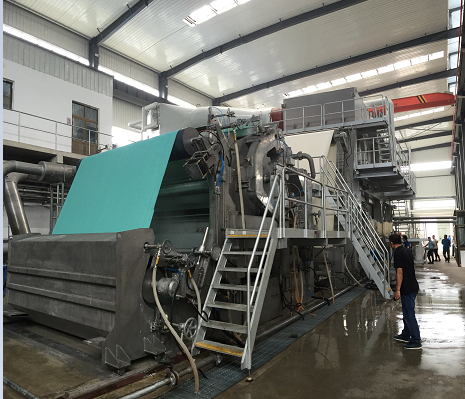
Modern hand towel tissue machines are highly sophisticated pieces of equipment designed to meet the diverse needs of the tissue industry. These machines are equipped with advanced technologies that enable them to perform a variety of functions, including cutting, folding, embossing, and printing. Embossing and printing are the two primary methods used to create patterns on hand towels.
Embossing
Embossing is a process that involves creating raised or recessed patterns on the surface of the hand towel. This is achieved by passing the tissue paper through a pair of embossing rollers, one of which has a pattern engraved on its surface. As the paper passes through the rollers, the pattern is transferred onto the paper, creating a three-dimensional effect.
The embossing process can be used to create a wide range of patterns, from simple geometric shapes to intricate designs. The depth and clarity of the embossed pattern depend on several factors, including the pressure applied by the rollers, the hardness of the rollers, and the type of tissue paper used.
Printing
Printing is another method used to create patterns on hand towels. This process involves applying ink to the surface of the tissue paper using a printing press. There are several types of printing methods that can be used, including flexographic printing, gravure printing, and digital printing.
Flexographic printing is a popular method for printing on tissue paper because it is fast, efficient, and can produce high-quality prints. This method involves using a flexible printing plate that is wrapped around a printing cylinder. The plate is then inked, and the ink is transferred onto the tissue paper as it passes through the printing press.
Gravure printing is a more traditional method of printing that involves engraving the pattern onto a copper cylinder. The cylinder is then inked, and the excess ink is wiped off, leaving the ink only in the engraved areas. The tissue paper is then passed through the printing press, and the ink is transferred onto the paper.
Digital printing is a relatively new method of printing that offers several advantages over traditional printing methods. This method involves using a digital printer to print the pattern directly onto the tissue paper. Digital printing allows for greater flexibility and customization, as it can print any pattern or design that can be created on a computer.
Factors Influencing Pattern Production
While hand towel tissue machines are capable of producing different patterns on hand towels, several factors can influence the quality and effectiveness of the pattern production process. These factors include:
Tissue Paper Quality
The quality of the tissue paper used can have a significant impact on the quality of the pattern produced. Tissue paper that is too thin or too weak may not be able to hold the embossed or printed pattern, resulting in a poor-quality print. On the other hand, tissue paper that is too thick or too stiff may be difficult to emboss or print, resulting in a less detailed pattern.
Machine Settings
The settings of the hand towel tissue machine can also affect the quality of the pattern produced. The pressure applied by the embossing rollers, the temperature of the printing press, and the speed of the machine can all have an impact on the clarity and depth of the pattern. It is important to adjust these settings carefully to ensure that the pattern is produced to the desired quality.
Design Complexity
The complexity of the pattern design can also affect the ability of the hand towel tissue machine to produce the pattern. Simple geometric shapes and designs are generally easier to emboss or print than intricate designs. Additionally, patterns that require a high level of detail or precision may require more advanced printing or embossing techniques.
Examples of Patterns Produced by Hand Towel Tissue Machines
To illustrate the capabilities of hand towel tissue machines, let's take a look at some examples of patterns that can be produced using these machines.
Geometric Patterns
Geometric patterns, such as squares, circles, and triangles, are some of the simplest patterns that can be produced using a hand towel tissue machine. These patterns can be embossed or printed onto the tissue paper using a variety of techniques, including flexographic printing and embossing.

Floral Patterns
Floral patterns are a popular choice for hand towels, as they add a touch of elegance and beauty to the product. These patterns can be embossed or printed onto the tissue paper using a variety of techniques, including digital printing and gravure printing.
Brand Logos
Many companies choose to print their brand logos on hand towels as a way to promote their brand. These logos can be printed onto the tissue paper using a variety of techniques, including flexographic printing and digital printing.
Conclusion
In conclusion, a hand towel tissue machine can indeed produce different patterns on hand towels. The machine's technical capabilities, including embossing and printing, allow for the creation of a wide range of patterns, from simple geometric shapes to intricate designs. However, the quality and effectiveness of the pattern production process depend on several factors, including the tissue paper quality, machine settings, and design complexity.
If you are interested in purchasing a hand towel tissue machine or have any questions about pattern production, please feel free to [contact us for procurement discussions]. We are a leading supplier of hand towel tissue machines, and we offer a wide range of machines, including the Crescent Former Tissue Machine, Kitchen Towel Tissue Machine, and Facial Tissue Making Machine. Our team of experts is available to assist you in selecting the right machine for your needs and providing you with the support and training you need to operate the machine effectively.
References
- Smith, J. (2020). Tissue Paper Manufacturing: Principles and Practice. New York: Wiley.
- Jones, A. (2019). Embossing and Printing Techniques for Tissue Paper. London: Elsevier.
- Brown, C. (2018). Digital Printing on Tissue Paper: A Review. Journal of Tissue Science and Technology, 45(2), 123-135.