


Hey there! As a supplier of Graphic Paper Machines, I've seen my fair share of issues in the paper - making process. One of the most common problems that paper manufacturers often face is paper curl. In this blog, I'll walk you through how a graphic paper machine deals with this pesky problem.
First off, let's understand what paper curl is. Paper curl refers to the tendency of paper to bend or curl at the edges or in the middle. It can happen in either the cross - machine direction (CD) or the machine direction (MD). Curl can be a real headache for printers and end - users because it can cause jams in printing machines, affect the quality of printed images, and make the paper difficult to handle.
So, how does a graphic paper machine tackle this issue? Well, it all starts from the very beginning of the paper - making process.
1. The Forming Section
In the forming section of a graphic paper machine, the pulp is first laid onto a moving wire mesh to form a wet paper web. The way the pulp is distributed on the wire is crucial in preventing curl. Uneven pulp distribution can lead to differences in fiber orientation and moisture content across the paper web, which can cause curl later on.
Our Graphic Paper Machine is equipped with advanced pulp distribution systems. These systems ensure that the pulp is evenly spread across the wire, promoting a more uniform fiber orientation. A uniform fiber orientation means that the paper is less likely to curl because the internal stresses within the paper are more evenly distributed.
2. The Press Section
After the forming section, the wet paper web moves to the press section. Here, the main goal is to remove as much water as possible from the paper web. However, the pressing process can also have an impact on paper curl.
If the pressure applied during pressing is uneven, it can cause differences in the density of the paper across its width. This density variation can lead to curl. Our graphic paper machines are designed with precision - engineered press rolls. These rolls apply a consistent pressure across the entire width of the paper web, ensuring that the paper has a uniform density.
Moreover, the press section also helps in controlling the moisture content of the paper. By removing excess water in a controlled manner, we can prevent the paper from having a moisture gradient, which is another major cause of curl.
3. The Drying Section
The drying section is perhaps the most critical part of the paper - making process when it comes to dealing with paper curl. In this section, the paper web is dried to the desired moisture content.
One of the key factors in preventing curl during drying is to ensure a uniform drying rate across the paper web. If one part of the paper dries faster than another, it can create internal stresses that lead to curl. Our graphic paper machines use advanced drying technologies, such as multi - stage drying cylinders and infrared dryers.
The multi - stage drying cylinders allow for a gradual and controlled drying process. The paper web passes through a series of cylinders with different temperatures, which helps in maintaining a uniform drying rate. Infrared dryers, on the other hand, can target specific areas of the paper web to ensure that the moisture is evenly removed.
We also monitor the moisture content of the paper in real - time during the drying process. By continuously adjusting the drying parameters, such as temperature and air flow, we can keep the moisture content of the paper within a narrow range, reducing the risk of curl.
4. The Calendering Section
After drying, the paper web moves to the calendering section. Calendering is a process where the paper is passed through a series of rollers to improve its smoothness, gloss, and thickness uniformity.
In addition to these benefits, calendering can also help in reducing paper curl. The pressure applied during calendering can help to relieve some of the internal stresses within the paper. Our graphic paper machines have adjustable calender rolls, which allow us to fine - tune the pressure applied to the paper. This ensures that the paper is calendered evenly, further reducing the likelihood of curl.
5. Post - Processing Treatments
Sometimes, even after going through all the above steps, there may still be a slight tendency for the paper to curl. In such cases, post - processing treatments can be used.
One common post - processing treatment is conditioning. Conditioning involves exposing the paper to a controlled environment with a specific temperature and humidity. This helps to balance the moisture content of the paper and relieve any remaining internal stresses. Our graphic paper machines can be integrated with conditioning systems to provide this additional level of curl control.
Another option is the application of coatings. Coatings can help to protect the paper from environmental factors that can cause curl, such as changes in humidity. They can also add a layer of stability to the paper, reducing its tendency to curl.
Comparing with Other Machines
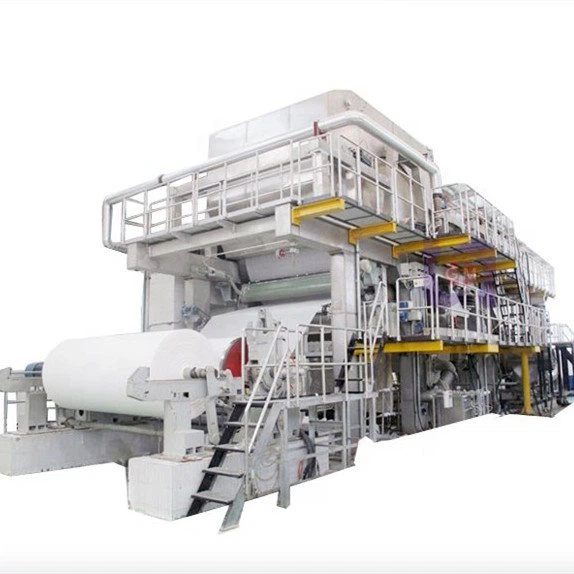
When compared to Newsprint Paper Machine and Writing Paper Making Machine, our graphic paper machine has several advantages when it comes to dealing with paper curl.
Newsprint paper machines are mainly designed for high - speed production of newsprint, which is a relatively low - quality paper. These machines may not have the same level of precision in controlling paper curl as our graphic paper machines. Writing paper making machines, on the other hand, are focused on producing writing papers, and while they may have some curl - control features, our graphic paper machines are specifically engineered to produce high - quality graphic papers with minimal curl.
Conclusion
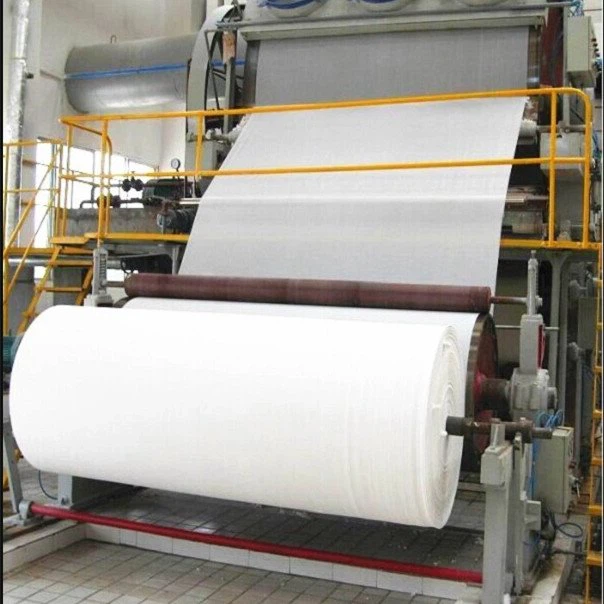
Dealing with paper curl is a complex but manageable task. Our graphic paper machines are designed with a range of advanced technologies and features to ensure that the paper produced has minimal curl. From the forming section to post - processing treatments, every step in the paper - making process is carefully optimized to control curl.
If you're in the market for a graphic paper machine and want to solve the paper curl problem once and for all, don't hesitate to reach out. We're here to help you find the best solution for your paper - making needs. Let's have a chat and see how we can work together to improve your paper production.
References
- "Handbook of Pulp and Paper Technology"
- "Paper Physics and Chemistry"