


Hey there! I'm from a newsprint paper machine supplier, and today I wanna chat about how a newsprint paper machine adjusts the paper stiffness. It's a pretty interesting topic, especially if you're in the paper - making business.
First off, let's understand why paper stiffness matters. Stiffness affects how the paper performs during printing and handling. For newsprint, it needs to be stiff enough to run smoothly through the printing presses without jamming, but not so stiff that it becomes brittle and tears easily.
One of the key ways to adjust paper stiffness is through the pulp selection. Different types of pulp have different characteristics that impact the final paper stiffness. Softwood pulp, for example, generally has longer fibers compared to hardwood pulp. These longer fibers can form a more interconnected network in the paper, which often leads to higher stiffness. When we're setting up a newsprint paper machine, we work closely with our clients to determine the right blend of softwood and hardwood pulps. Some might opt for a higher percentage of softwood pulp if they need a stiffer paper for high - speed printing. You can learn more about the machines involved in this process on our Newsprint Paper Machine page.
Another factor is the refining process. Refining the pulp is like giving the fibers a workout. It cuts and swells the fibers, increasing their surface area and making them more likely to bond together. When the fibers bond better, the paper becomes stiffer. On our newsprint paper machines, we have advanced refining systems that can be precisely controlled. The operator can adjust the refining intensity based on the desired paper stiffness. If you want a really stiff paper, a more intense refining process can be used. But be careful, over - refining can also make the paper too dense and reduce its porosity, which might affect other properties like ink absorption.
The pressing section of the paper machine also plays a crucial role. In this section, the wet paper web is squeezed between rollers to remove water. The pressure applied during pressing can impact the paper's structure and, consequently, its stiffness. Higher pressing pressure compresses the fibers more tightly together, increasing the paper's density and stiffness. However, we need to find the right balance. Too much pressure can damage the fibers and lead to a weaker paper in some cases. Our machines are equipped with adjustable pressing systems, allowing operators to fine - tune the pressure according to the specific requirements of the newsprint.
Drying is yet another important step. As the paper dries, the fibers shrink and bond more firmly. The drying rate and temperature can be adjusted to control the paper stiffness. A slower drying rate at a lower temperature often results in a more uniform shrinkage of the fibers, leading to a stiffer paper. On the other hand, a rapid drying process might cause uneven shrinkage and result in a less stiff paper. Our newsprint paper machines have state - of - the - art drying systems that can be customized for different stiffness needs.
Additives can also be used to adjust paper stiffness. There are various chemical additives available in the market. For example, starch can be added to the pulp or sprayed onto the paper surface. Starch acts as a binder, strengthening the fiber - to - fiber bonds and increasing the paper's stiffness. Other additives like wet - strength resins can also be used in small amounts to enhance the paper's overall strength and stiffness. But we always need to consider the cost - effectiveness and environmental impact of these additives.
Now, let's talk about the role of the machine's control systems. Our newsprint paper machines are equipped with advanced control systems that can monitor and adjust various parameters in real - time. These systems use sensors to measure things like paper thickness, moisture content, and even stiffness. Based on the data collected, the control system can automatically make adjustments to the refining, pressing, drying, and other processes to ensure that the paper meets the desired stiffness specifications. This not only improves the quality of the paper but also increases the efficiency of the production process.
If you're in the market for other types of paper - making machines, we also offer Offset Printing Paper Machine and Writing Paper Making Machine. These machines have their own unique features and capabilities, but the principles of adjusting paper properties like stiffness are somewhat similar.

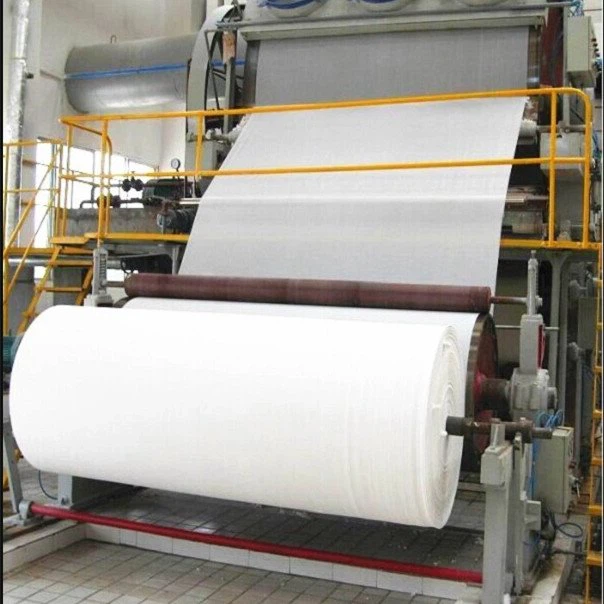
In conclusion, adjusting the paper stiffness on a newsprint paper machine is a complex but manageable process. It involves a combination of pulp selection, refining, pressing, drying, the use of additives, and advanced control systems. At our company, we're constantly working on improving our machines to provide the best possible solutions for our clients. Whether you're a small - scale paper producer or a large - scale industrial operation, we have the expertise and technology to help you achieve the perfect paper stiffness for your newsprint.
If you're interested in learning more about our newsprint paper machines or want to discuss your specific paper - making needs, we'd love to hear from you. Just reach out to us, and we can start a conversation about how we can work together to optimize your paper production process.
References:
- "Handbook of Pulp and Paper Technology"
- "Paper Physics and Chemistry"