


How does a newsprint paper machine control the thickness of newsprint?
As a supplier of Newsprint Paper Machines, I've witnessed firsthand the intricate processes and advanced technologies involved in producing high - quality newsprint. Controlling the thickness of newsprint is a critical aspect of the papermaking process, as it directly impacts the printability, durability, and overall quality of the final product. In this blog, I'll delve into the various methods and mechanisms that a newsprint paper machine employs to ensure precise thickness control.
Understanding the Basics of Newsprint Production
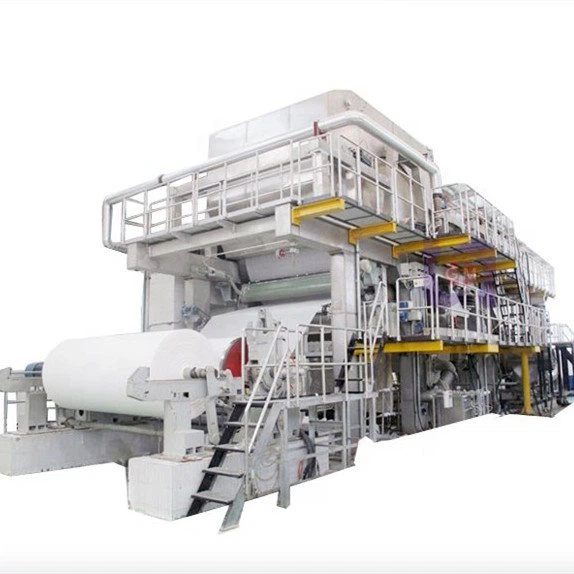
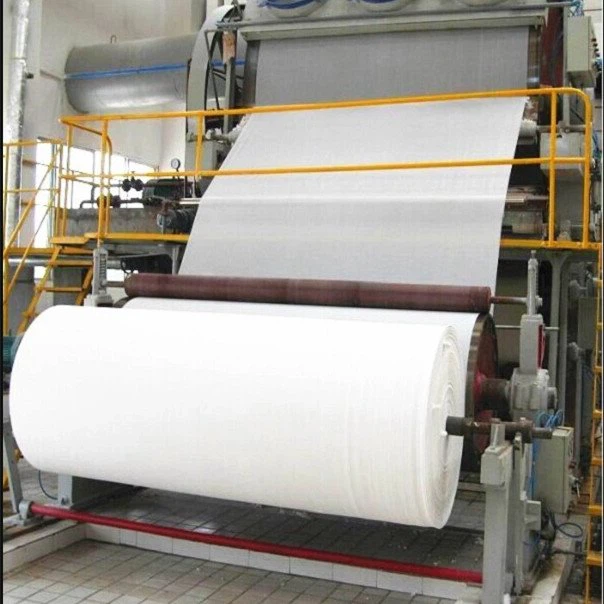
Before we explore the thickness control methods, it's essential to understand the basic steps in newsprint production. A Newsprint Paper Machine typically consists of several sections: the headbox, the forming section, the press section, the drying section, and the calendering section.
The headbox is where the pulp suspension, which is a mixture of wood fibers, water, and various additives, is evenly distributed across the width of the machine. The forming section is responsible for removing a significant amount of water from the pulp suspension, forming a wet paper web. The press section further squeezes out water from the web, and the drying section uses heat to evaporate the remaining water. Finally, the calendering section smooths and compresses the paper to achieve the desired thickness and surface finish.
Key Factors Affecting Newsprint Thickness
Several factors can influence the thickness of newsprint, including the consistency of the pulp suspension, the speed of the paper machine, the pressure applied in the press and calendering sections, and the temperature and humidity in the drying section.
The consistency of the pulp suspension refers to the ratio of dry fibers to water in the mixture. A higher consistency means more fibers per unit volume of the suspension, which can result in a thicker paper. Conversely, a lower consistency will produce a thinner paper. The speed of the paper machine also plays a crucial role. A faster - running machine may not allow enough time for proper water removal and fiber consolidation, leading to variations in thickness.
Thickness Control Methods
1. Headbox Optimization
The headbox is the first and one of the most critical points for thickness control. Modern newsprint paper machines are equipped with advanced headbox technologies that ensure a uniform distribution of the pulp suspension across the width of the machine. This is achieved through the use of flow - control devices, such as adjustable slice lips and turbulence generators.
Adjustable slice lips allow operators to precisely control the flow rate and thickness of the pulp suspension at the exit of the headbox. By adjusting the opening of the slice lips, the amount of pulp delivered to the forming section can be fine - tuned, thereby influencing the thickness of the paper. Turbulence generators are used to create a uniform and stable flow of the pulp suspension, preventing the formation of streaks or uneven areas in the paper web.
2. Forming Section Management
In the forming section, the dewatering process must be carefully controlled to ensure a consistent paper thickness. Vacuum boxes are commonly used to remove water from the wet paper web. By adjusting the vacuum level in these boxes, operators can control the rate of water removal. A higher vacuum level will remove more water, resulting in a denser and potentially thicker paper. However, excessive vacuum can also cause the fibers to be pulled out of the web, leading to holes or unevenness.
Some newsprint paper machines also use forming fabrics with different pore sizes and structures. A finer - meshed fabric can provide better support for the fibers and more uniform water removal, which can contribute to more consistent thickness.
3. Press Section Pressure Control
The press section is where significant compression of the paper web occurs. The pressure applied in the press rolls can be adjusted to control the amount of water removed and the density of the paper. Higher pressure will squeeze out more water and compress the fibers, resulting in a thinner and denser paper.
Modern newsprint paper machines are equipped with hydraulic systems that can precisely control the pressure applied in the press rolls. These systems can be adjusted based on real - time measurements of the paper thickness. For example, if the paper is too thick in a certain area, the pressure in the corresponding part of the press rolls can be increased to reduce the thickness.
4. Drying Section Regulation
The drying section is crucial for achieving the final moisture content and thickness of the newsprint. Temperature and humidity control in this section are essential. If the drying temperature is too high, the paper may dry too quickly, causing shrinkage and uneven thickness. On the other hand, if the temperature is too low, the paper may not dry completely, leading to a higher moisture content and a thicker paper.
Humidity control is also important, as it can affect the rate of water evaporation. By maintaining a stable humidity level in the drying section, operators can ensure consistent drying conditions across the width and length of the paper web. Some paper machines use infrared sensors to monitor the moisture content of the paper in real - time and adjust the drying parameters accordingly.
5. Calendering Section Adjustment
The calendering section is the final stage for thickness control. Calenders consist of a series of rolls that apply pressure to the paper web to smooth and compress it. The pressure applied in the calendering section can be adjusted to achieve the desired thickness and surface smoothness.
There are different types of calenders, including soft - nip calenders and hard - nip calenders. Soft - nip calenders use a combination of a hard roll and a soft roll, which can provide a more gentle and uniform compression of the paper. Hard - nip calenders, on the other hand, use two hard rolls and can apply higher pressure for more significant thickness reduction.
Advanced Technologies for Thickness Monitoring and Control
In addition to the traditional control methods, modern newsprint paper machines are increasingly using advanced technologies for real - time thickness monitoring and control. These technologies include beta - ray thickness gauges, infrared sensors, and laser scanners.
Beta - ray thickness gauges work by measuring the absorption of beta rays by the paper. The amount of absorption is proportional to the thickness of the paper. These gauges can provide highly accurate thickness measurements across the width and length of the paper web. Infrared sensors measure the moisture content and thickness of the paper based on the absorption and reflection of infrared light. Laser scanners use a laser beam to scan the surface of the paper, detecting any variations in thickness or surface profile.
The data collected by these sensors is fed into a control system, which can automatically adjust the operating parameters of the paper machine, such as the slice lip opening in the headbox, the vacuum level in the forming section, the pressure in the press and calendering sections, and the temperature and humidity in the drying section. This closed - loop control system ensures that the thickness of the newsprint remains within the specified tolerance throughout the production process.
Importance of Consistent Thickness in Newsprint
Consistent thickness is crucial for newsprint for several reasons. From a printability perspective, a uniform thickness ensures that ink is evenly transferred onto the paper surface, resulting in sharp and clear images and text. Inconsistent thickness can cause ink to pool in thicker areas or not adhere properly in thinner areas, leading to poor print quality.
In terms of durability, a paper with a consistent thickness is more likely to have uniform strength properties. This is important for handling during the printing process and for the end - user experience. Newspapers with uneven thickness may tear more easily or have a shorter shelf life.
Conclusion
Controlling the thickness of newsprint is a complex and multi - faceted process that involves optimizing various aspects of the papermaking process, from the headbox to the calendering section. By carefully managing factors such as pulp consistency, machine speed, pressure, temperature, and humidity, and by leveraging advanced technologies for thickness monitoring and control, newsprint paper machines can produce high - quality newsprint with consistent thickness.
As a supplier of Newsprint Paper Machines, we are committed to providing our customers with state - of - the - art equipment and solutions that ensure precise thickness control. Our machines are designed to be highly efficient, reliable, and easy to operate, helping our customers meet the demanding quality requirements of the newsprint industry.
If you are in the market for a newsprint paper machine or are looking to upgrade your existing equipment, we invite you to contact us for a detailed discussion. Our team of experts is ready to assist you in selecting the right machine for your specific needs and to provide comprehensive technical support and after - sales service.
We also offer a range of related products, such as Graphic Paper Machine and Writing Paper Making Machine, which are designed to produce high - quality graphic and writing papers. Contact us today to explore how we can help you enhance your papermaking operations.
References
- "Papermaking Science and Technology", by G.A. Smook.
- "Handbook of Pulp and Paper Technology", edited by P. K. Sarkar.
- Technical literature from leading paper machine manufacturers.