


As a prominent supplier of towel paper machines, I've witnessed firsthand the pivotal role quality control standards play in the manufacturing process. In this blog, I'll delve into the essential quality control standards for towel paper machines, offering insights into why they matter and how they ensure the production of high - quality towel paper.
1. Mechanical Structure and Build Quality
The mechanical structure of a towel paper machine is the foundation upon which its performance is built. High - quality materials are a must. For instance, the frame of the machine should be constructed from heavy - duty steel that can withstand the rigors of continuous operation. This not only ensures the machine's stability but also extends its service life.
Precision in manufacturing is equally important. All components, from the rollers to the gears, must be machined to exact specifications. Any deviation in dimensions can lead to misalignment, which in turn can cause uneven paper formation, tearing, or other defects in the towel paper. For example, if the rollers are not perfectly cylindrical or parallel, the paper may not be evenly compressed, resulting in inconsistent thickness across the towel.
The joints and connections in the machine also need to be well - made. Welds should be strong and free of cracks, and bolts and nuts should be tightened to the correct torque. Loose connections can cause vibrations during operation, which can damage the machine and affect the quality of the produced paper.
2. Paper Formation and Web Quality
The ability of a towel paper machine to form a uniform paper web is a key quality control aspect. The pulp suspension should be evenly distributed across the wire section of the machine. This requires a well - designed headbox, which is responsible for delivering the pulp onto the wire at a consistent flow rate and pressure.
The wire itself plays a crucial role. It should have the right mesh size and surface properties to allow for proper drainage of water from the pulp while retaining the fibers. A worn - out or damaged wire can lead to holes, streaks, or uneven fiber distribution in the paper web.
Once the paper web is formed, its thickness and basis weight need to be carefully controlled. Sensors are often used to measure these parameters in real - time. If the basis weight or thickness deviates from the set standards, the machine can automatically adjust the pulp flow or other process parameters to correct the issue. For example, if the basis weight is too high, the machine can reduce the pulp flow rate; if it's too low, it can increase the flow.
3. Drying and Moisture Content Control
Proper drying is essential for the quality of towel paper. The drying section of the machine should be able to remove the water from the paper web efficiently and evenly. This is typically achieved through a combination of steam - heated cylinders and hot air systems.
The temperature and humidity in the drying section need to be precisely controlled. If the drying temperature is too high, the paper can become brittle and prone to tearing. On the other hand, if it's too low, the paper may not be fully dried, leading to a damp and weak product.
Moisture content is a critical quality parameter. The ideal moisture content for towel paper usually ranges from 4% to 6%. Excessive moisture can cause the paper to stick together, while too little moisture can make it difficult to process and package. Moisture sensors are used to monitor the moisture content of the paper as it exits the drying section, and the machine can adjust the drying conditions accordingly.
4. Embossing and Finishing
Embossing is an important feature of towel paper, as it not only enhances the aesthetic appeal of the paper but also improves its absorbency. The embossing pattern should be clear, sharp, and consistent across the entire roll of paper.
The embossing rollers need to be made of high - quality materials and machined with precision. They should be able to apply the correct pressure to create the desired pattern without damaging the paper. If the pressure is too high, the paper may tear; if it's too low, the embossing pattern may be faint or incomplete.
After embossing, the paper may go through additional finishing processes such as perforation and folding. These processes also need to be carefully controlled. The perforations should be evenly spaced and of the right size to allow for easy tearing. The folding should be neat and accurate, ensuring that the paper is properly packaged and presented.
5. Safety and Operational Reliability
Safety is a top priority in any manufacturing process, and towel paper machines are no exception. The machine should be equipped with safety guards and emergency stop buttons to protect operators from potential hazards. Electrical systems should be properly grounded and insulated to prevent electrical shocks.
Operational reliability is also crucial. The machine should be able to run continuously for long periods without breakdowns. Regular maintenance and servicing are essential to ensure its reliability. Components such as bearings, belts, and motors should be inspected and replaced as needed to prevent unexpected failures.
6. Energy Efficiency
In today's environmentally - conscious world, energy efficiency is an important quality control standard for towel paper machines. The machine should be designed to use energy as efficiently as possible. This can be achieved through the use of advanced technologies such as heat recovery systems, which capture and reuse the heat generated during the drying process.
Variable frequency drives can also be used to control the speed of motors, allowing them to operate at the optimal speed for different production requirements. This reduces energy consumption and lowers operating costs.
7. Compatibility with Different Pulp Types
A high - quality towel paper machine should be able to work with a variety of pulp types, including virgin pulp, recycled pulp, and a blend of both. Different pulp types have different fiber properties, and the machine should be able to adjust its operating parameters accordingly to produce high - quality paper.
For example, recycled pulp may contain more contaminants and shorter fibers compared to virgin pulp. The machine should be able to remove these contaminants effectively and adjust the process to ensure proper fiber bonding and paper strength.
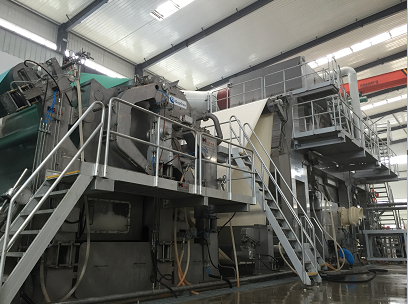

8. Productivity and Throughput
The productivity of a towel paper machine is another important quality control aspect. It should be able to produce a large quantity of high - quality towel paper within a given time frame. This requires a well - designed machine layout and efficient process flow.
The speed of the machine should be adjustable to meet different production demands. However, increasing the speed should not come at the expense of paper quality. The machine should be able to maintain consistent quality even at high speeds.
Conclusion
In conclusion, the quality control standards for a towel paper machine cover a wide range of aspects, from mechanical structure and paper formation to safety, energy efficiency, and productivity. By adhering to these standards, we can ensure that our towel paper machines produce high - quality towel paper that meets the needs of our customers.
If you are in the market for a towel paper machine, whether it's a Facial Tissue Making Machine, Kitchen Towel Tissue Machine, or Napkin Tissue Paper Machine, we are here to provide you with the best solutions. Our machines are designed and manufactured with strict quality control in mind, ensuring reliable performance and high - quality paper production. We welcome you to contact us for more information and to discuss your specific requirements. Let's work together to take your towel paper production to the next level.
References
- "Handbook of Pulp and Paper Technology"
- "Paper Machine Operation and Maintenance Guide"
- Industry reports on towel paper manufacturing technology