


As a supplier of newsprint paper machines, I'm often asked about the working principle of these complex and fascinating pieces of equipment. In this blog post, I'll take you through the step-by-step process of how a newsprint paper machine operates, from the raw materials to the finished product.
Raw Material Preparation
The first stage in the production of newsprint paper is the preparation of the raw materials. Newsprint is typically made from a combination of wood pulp and recycled paper. Wood pulp is the primary ingredient, and it can be sourced from either softwood or hardwood trees. Softwood pulp is preferred for newsprint because it has long fibers that provide strength and durability to the paper.
The wood is first debarked and chipped into small pieces. These chips are then cooked in a chemical solution to break down the lignin, which binds the wood fibers together. This process, known as pulping, can be done using either a mechanical or a chemical method. Mechanical pulping involves grinding the wood chips to separate the fibers, while chemical pulping uses chemicals to dissolve the lignin.
Recycled paper is also an important component of newsprint. It is collected from various sources, such as newspapers, magazines, and office waste. The recycled paper is shredded and mixed with water to form a pulp. This pulp is then screened and cleaned to remove any impurities, such as ink, staples, and plastic.
Stock Preparation
Once the raw materials have been prepared, they are combined to form a stock. The stock is a mixture of pulp, water, and various additives, such as fillers, dyes, and sizing agents. Fillers are used to improve the opacity and smoothness of the paper, while dyes are added to give the paper its color. Sizing agents are used to make the paper resistant to water and ink.
The stock is then refined to improve the strength and quality of the paper. Refining involves passing the stock through a series of rotating discs or bars, which break down the fibers and make them more flexible. This process also increases the surface area of the fibers, which improves their ability to bond together.
Paper Formation
The next stage in the production of newsprint paper is paper formation. The stock is pumped onto a moving wire mesh, which is part of the paper machine. As the stock moves along the wire mesh, the water drains through the mesh, leaving behind a mat of fibers. This mat is then pressed between a series of rollers to remove more water and to compact the fibers.
The paper formation process is critical to the quality of the final product. The thickness and uniformity of the paper are determined by the speed of the wire mesh, the consistency of the stock, and the pressure applied by the rollers. Any variations in these parameters can result in defects in the paper, such as holes, streaks, or uneven thickness.

Drying
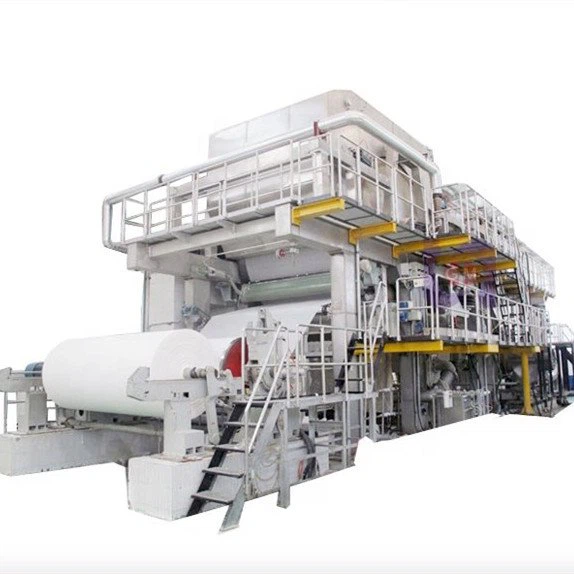
After the paper has been formed, it is still wet and needs to be dried. The paper is passed through a series of drying cylinders, which are heated by steam. As the paper passes over the drying cylinders, the heat evaporates the water from the paper, leaving behind a dry and strong sheet.
The drying process is carefully controlled to ensure that the paper is dried evenly and without any damage. The temperature and humidity of the drying environment are monitored, and the speed of the paper machine is adjusted to ensure that the paper is dried at the optimal rate.
Calendering
Once the paper has been dried, it is passed through a series of calender rolls. Calendering is a process that involves pressing the paper between a series of smooth rollers to improve its smoothness, gloss, and thickness. The calender rolls are usually made of steel or granite, and they are heated to a high temperature.
The calendering process can also be used to give the paper a specific finish, such as a matte or a glossy finish. The pressure and temperature of the calender rolls are adjusted to achieve the desired finish.
Reeling and Cutting
After the paper has been calendered, it is wound onto a large reel. The reel is then transported to a cutting machine, where the paper is cut into the desired size and shape. The cutting machine can be used to cut the paper into sheets or rolls, depending on the customer's requirements.
The final stage in the production of newsprint paper is packaging. The cut paper is packed into bundles or rolls and then shipped to the customer. The packaging is designed to protect the paper from damage during transportation and storage.
Conclusion
In conclusion, the working principle of a newsprint paper machine is a complex and highly technical process. It involves the preparation of raw materials, the formation of a stock, the formation of the paper, the drying of the paper, the calendering of the paper, and the cutting and packaging of the paper. Each stage of the process is critical to the quality of the final product, and any variations in the process can result in defects in the paper.
As a supplier of newsprint paper machines, we are committed to providing our customers with high-quality equipment that is reliable, efficient, and easy to operate. Our machines are designed to meet the specific needs of our customers, and we offer a range of customization options to ensure that our machines are tailored to their requirements.
If you are interested in learning more about our newsprint paper machines or if you have any questions about the working principle of these machines, please do not hesitate to contact us. We would be happy to provide you with more information and to discuss your specific needs. You can also visit our website to learn more about our Writing Paper Making Machine, Newsprint Paper Machine, and Graphic Paper Machine.
References
- "Paper Making Technology" by G.A. Smook
- "Handbook of Pulp and Paper Technology" by R.G. Macdonald and J.N. Franklin
- "The Paper Industry: A Global Perspective" by P. van den Akker and J. van der Wulp